
The United States' Artemis mission surpasses the farthest deep space flight record, with astronauts
Artemis mission progresses, astronauts witness a solar eclipse
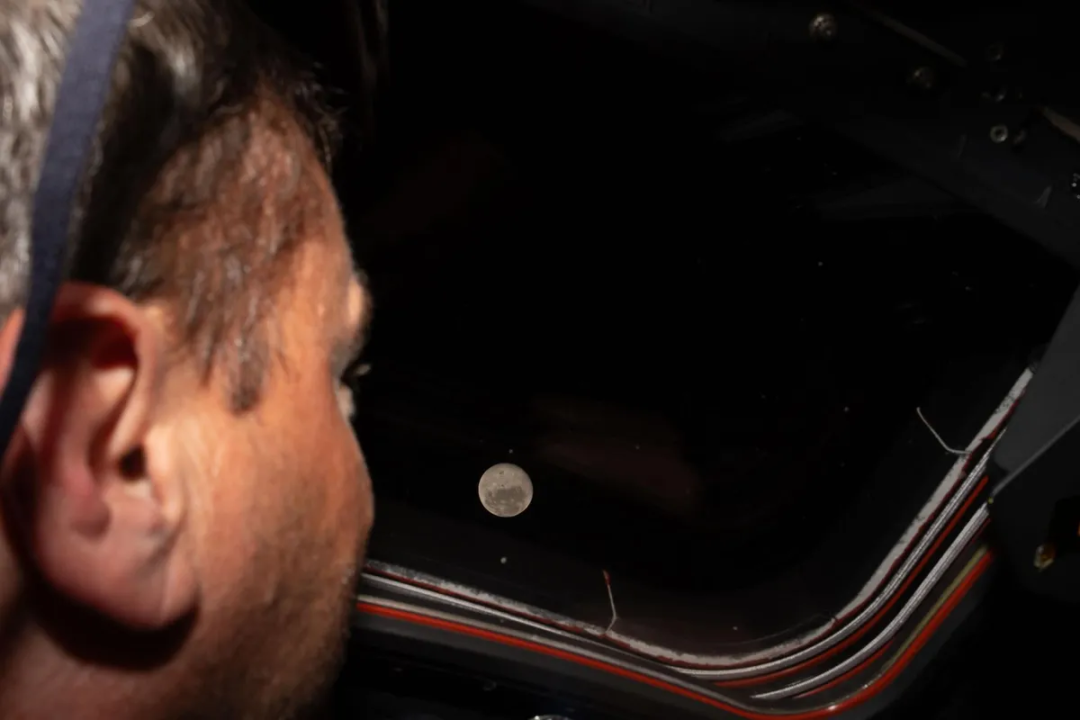
Image credit: NASA
On the fifth day of the mission,Artemis IIsuccessfully surpassed the deep-space flight distance record set by Apollo 13 in 1970. On April 6 local time, theOrionspacecraft, carrying four astronauts, reached its farthest point from Earth at approximately 406,000 kilometers, exceeding the half-century-old record by 6,600 kilometers. During this time, the spacecraft passed behind the Moon, experiencing about 40 minutes of communication blackout. Currently,the spacecraft has completed its lunar flyby and successfully turned back, officially beginning its four-day return journey to Earth.
On that day, the astronauts also experienced a rare visual spectacle in space——a total solar eclipse. Unlike the few minutes of totality visible to ground observers, because the Orion spacecraft was only a few thousand kilometers from the Moon, the Moon completely obscured the solar disk,and the total phase of this solar eclipse lasted an astonishing 57 minutes. The astronauts also used this window to conduct several key scientific observations. For instance, when the edge of the Moon appeared to align with the edge of the Sun, the astronauts clearly capturedthe characteristics of the solar corona(including coronal streamers and polar plumes), which are of great value for studying solar magnetic activity. This mission has accumulated valuable data on the lunar environment and space observations for NASA's subsequent crewed lunar landing plans. (The Guardian,Scientific American)