
Trump administration dismisses all members of the National Science Board under the National Science
The Trump administration dismissed all members of the National Science Board under the National Science Foundation
According to Nature's website on April 26, the Trump administration on Friday dismissed all 22 members of the National Science Board (NSB) under the National Science Foundation (NSF). It is reported that NSB members are appointed by the president for six-year terms, with staggered rotations to avoid a complete turnover of members. The White House has not yet responded to Nature's inquiries regarding the reasons for the dismissals or whether replacements will be appointed. This is not the first time the Trump administration has dissolved federal science advisory bodies on a large scale. Last year, the administration dismissed all 17 members of the Advisory Committee on Immunization Practices, which played a key role in vaccine policy formulation, and canceled 14 advisory committees under the National Science Foundation. Also last year, Trump issued an executive order abolishing several advisory committees, including the Advisory Committee on Long COVID, citing the need to cut government spending and "promote American freedom and innovation."
The U.S. and the EU reach a critical minerals supply chain resilience action plan, using trade tools to address non-market policies and strengthen industrial competitiveness
According to the USTR website on April 24, the United States and the European Union formally reached the "Critical Minerals Supply Chain Resilience Action Plan." This plan will serve as the core mechanism for coordinating trade policies in the critical minerals sector between the two sides, aiming to explore trade measures such as border adjustments for low prices to address the distortion of supply chains caused by non-market policies, ultimately promoting a binding multilateral agreement on critical minerals trade and strengthening the security of the transatlantic critical minerals supply chain.
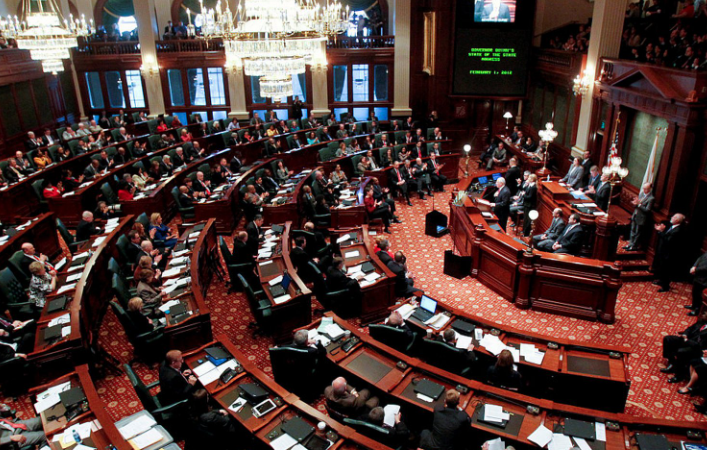
The U.S. House of Representatives proposes the establishment of a Future Economy Commission to assess the impact of AI on the job market and formulate response strategies
According to meritalk.com on April 24, bipartisan lawmakers in the U.S. House of Representatives introduced the "Future Economy Commission Act of 2026," proposing the establishment of a new commission to study the impact of artificial intelligence on the U.S. economy and formulate policy recommendations. The commission will submit its first report within seven months, assessing the expected impact of AI on employment and the economy; it will complete a second report within 13 months, proposing legislative recommendations. The bill aims to address the risk of approximately 100 million job losses that AI may bring, focusing on issues such as workforce development, education system reform, and federal AI applications.