
The 'artificial sun' sets a new record, marking another victory for Chinese style scientific research methodology
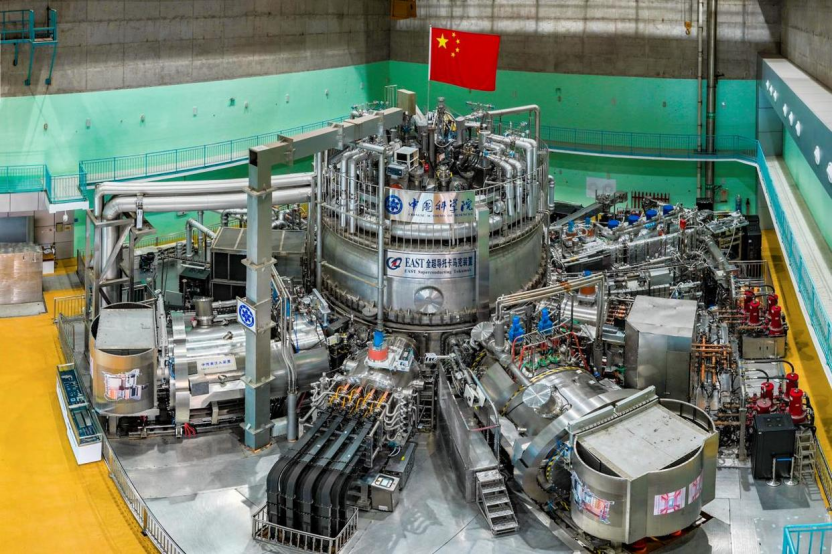
On January 20, 2025, exciting news once again came from the field of science and technology in China. In Hefei, Anhui Province, the fully superconducting tokamak nuclear fusion experimental device (EAST), also known as the "artificial sun", has successfully set a new world record, achieving high confinement mode plasma operation at 100 million degrees Celsius for 1066 seconds for the first time. This achievement not only marks a significant leap from basic science to engineering practice in China's research on nuclear fusion energy, but also showcases China's leading position in controllable nuclear fusion technology to the world. Behind this achievement is the accumulation of decades of hard work and independent innovation by several generations of Chinese researchers. Looking back at the development process of controllable nuclear fusion technology in China, from the difficult exploration in the initial stage to the brilliant achievements standing at the forefront of the world today, this history is full of ups and downs and also witnesses the gradual maturity and improvement of China's scientific and technological development strategy.
Let's imagine a scenario where one day, all the slogans of "saving energy" in the world disappear; You don't need to pay electricity bills anymore, because electricity has become inexhaustible and inexhaustible; As long as all residents agree, the entire city can be brightly lit with constant temperature and humidity; Isn't it wonderful that people don't need labor, and an endless assembly line can produce automatically? Is it possible for it to come true? As far as the current level of human technology is concerned, the most likely way to achieve this dream is to overcome the technology of "controllable nuclear fusion". This is not nonsense, but the viewpoint of former International Atomic Energy Commission Chairman Lewis Strauss. Why? Because theoretically, nuclear fusion reactions only require a few grams of raw materials to generate trillions of joules of energy without producing polluting waste. What kind of concept is this? It's like planting a sesame seed, you don't have to put in any more effort, and you can harvest a full 60 years of personal necessities. Are you saying cow or not? How did our country go from being unable to sit at the international table to becoming a leading player in the face of such a technology that opens up a new world for humanity?
The research on controllable nuclear fusion technology by poor apprentices who cannot sit at the card table began in the early 1950s. That was an era of the Cold War, where two major camps - the Western camp led by the United States and the Eastern camp led by the Soviet Union - engaged in fierce competition in the field of nuclear technology. Nuclear fusion, as the ultimate dream of future energy, has naturally become the focus of competition between both sides. At that time, nuclear fusion research was like a secret 'underground race', with countries competing secretly in an attempt to take the lead in mastering the core technology. This confidentiality prevented China at that time from even having the opportunity to "copy homework" and could only stand outside the table, watching eagerly, like an "apprentice who couldn't get on the table". The core challenge of nuclear fusion technology quickly surfaced: how to contain the "fuel" heated to billions of degrees Celsius and in a plasma state, and confine it in a high-pressure state? This is like putting a small sun into an iron box, the difficulty can be imagined. It is almost impossible for a single country to overcome this technological challenge. So, the two camps began to realize that only by working together can they jointly move towards this ultimate goal of humanity. The shift from "fighting on its own" to "win-win cooperation" has also provided China with an opportunity to "steal lessons". In 1958, the Second International Conference on the Peaceful Uses of Atomic Energy was held in Geneva. At the meeting, the Soviet Union announced the construction of the magnetic mirror device "Ogra" and presented a four volume collection titled "Plasma Physics and Controlled Thermonuclear Reaction Problems". This achievement has received high praise from the conference and has fully made the latest progress in nuclear fusion research public. These public "notes of top students" are undoubtedly a timely help to China outside the playing table. Chinese scientists finally have a "textbook" to catch up with. In May of the same year, the Institute of Physics of the Chinese Academy of Sciences ushered in an important moment. Sun Xiang, who returned from studying in the United States, led the formation of the first 103 teams and officially began research on controllable nuclear fusion in China. Just a few months later, Group 103 achieved a significant breakthrough - they used a small pulse discharge device to successfully create high-temperature plasma. This achievement, as a key project presented as a National Day gift by the Chinese Academy of Sciences, was praised by the People's Daily as the "artificial little sun". China's first step in the field of nuclear fusion is quite solid. However, the good times did not last long. In 1959, a three-year difficult period quietly arrived. Famine and natural disasters have swept across the country, posing enormous challenges to the country's economy. In this context, continuing to invest large amounts of funds in scientific research institutions seems somewhat luxurious. The funding for nuclear fusion research has been significantly reduced, and research backbones have been gradually transferred to higher priority tasks such as the development of the two bombs. The once hopeful research on nuclear fusion has gradually come to a halt. In 1963, the Nuclear Fusion Research Group at the Institute of Physics, Chinese Academy of Sciences was officially disbanded, marking the end of the first wave of nuclear fusion research enthusiasm. At that time, although China had the intention to catch up with nuclear fusion technology, it could only temporarily stop and wait for the opportunity due to objective limitations. This' poor apprentice who cannot attend the table ', although temporarily unable to participate in international competition, has quietly prepared outside the table, waiting for the opportunity to re-enter.
Strugglers who keep up with the trend: from "unable to get on the table" to "standing firm". Next, let's take a look at the second stage: strugglers who keep up with the trend. In the 1960s, the international situation was constantly changing, with the shadow of the Cold War looming over the world, and competition for nuclear technology becoming increasingly fierce. Chairman Mao had a far sighted vision and creatively proposed the "Third Front Construction" strategy, deciding to vigorously develop defense and basic industries in the central and western regions. This strategy is not only to cope with the uncertainty of the international situation, but also to open up an independent path for China's scientific and technological development under extremely difficult conditions. In 1965, the Second Ministry of Machinery Industry made a key decision: to integrate the national nuclear fusion research force and relocate to Leshan, Sichuan to establish the 585 Research Institute of the Second Ministry of Machinery Industry, which later became the famous Southwest Institute of Nuclear Industry Physics. This measure has provided a solid "base camp" for China's controllable nuclear fusion research, and also marks the official formation of China's own "national team". However, having a team is only the first step, the next question is: which direction should we strive towards? At that time, the field of nuclear fusion research was like a vast ocean. Although the goal was clear - to achieve controllable nuclear fusion, no one was sure how to proceed. At this moment, an exciting news came from the Soviet Union. In 1968, the Soviet Union released experimental data from the Tokamak device. They successfully fixed the plasma in a circular cavity, which is like putting the central part of the sun into a stable container! This achievement is like a shot in the arm, instantly sweeping away the pessimistic sentiment of academia and industry towards nuclear fusion research. Since the 1970s, there has been a global wave of "tokamak" research and development in nuclear fusion. Of course, China is not willing to fall behind. In 1970, Chen Chunxian from the Institute of Physics of the Chinese Academy of Sciences proposed a bold idea: to combine the large-scale energy storage device being developed by the Institute of Electrical Engineering to build a tokamak device. This idea quickly caught the attention of the higher ups. In 1972, Premier Zhou Enlai personally instructed and supported this idea. In 1973, the Chinese Academy of Sciences established a controlled thermonuclear reaction research experimental station in Hefei. Subsequently, in 1977, the medium to large tokamak experimental device, codenamed "Project 8," was approved for project approval. At this point, China's controllable nuclear fusion research has initially formed a pattern of "dual centers in Sichuan and Anhui", one in Leshan and the other in Hefei, working together to promote the development of China's nuclear fusion industry. In 1979, the Chinese economy entered another round of adjustment. In this context, the "Project No. 8" of the Chinese Academy of Sciences was forced to be dismantled. However, fortunately, the medium-sized circulation system project of 585 Institute was preserved and successfully launched in 1984, named "China Circulation System No.1". Its successful development marks a solid step forward for China in nuclear fusion research, solving the problem of "having or not having" from zero to one. However, to be honest, at that time, the performance of the "China Loop No.1" was relatively limited, and it can only be said implicitly that it was "in a leading position in the construction of nuclear fusion research devices and experimental research in the third world". In other words, although we have our own devices, there is still a considerable gap compared to the international mainstream level. But Chinese researchers have not been discouraged by this. In 1991, the Institute of Plasma Science and Technology of the Chinese Academy of Sciences seized a rare opportunity to reach a cooperation agreement with the Kurchatov Research Institute of Russia and introduced the T-7 medium-sized superconducting tokamak device developed by Russia. With the joint efforts of experts from China and Russia, and through deep transformation, the first superconducting tokamak device HT-7 in China was officially built in 1994. This time, the performance of HT-7 has made a qualitative leap and is recognized by the international academic community as "unquestionably leading in the third world, approaching the forefront of international fusion research". In other words, China finally has a device that can make its international peers' take notice '. This is the second wave of global nuclear fusion research, and also the second stage of China's controllable nuclear fusion development. At this stage, China has gradually grown from a novice who cannot sit at the table to a struggler who can stand firm. The poor apprentice who used to only be able to watch from outside the table has now received his admission ticket, and it's time for him to show off his skills.
Phase Three: The world leading organizers, we temporarily set the time back to 1976. At that time, the International Thermonuclear Experimental Reactor (ITER) program, initiated by the United States and the Soviet Union and jointly built by the United States, Europe, Japan, and Russia within the framework of the International Atomic Energy Agency (IAEA), was officially launched. This is a massive scientific project aimed at verifying the scientific feasibility of core fusion technology and the engineering feasibility of reactors. However, products of the Cold War always inevitably carry the genes of the Cold War. The continuous increase in budget, complex political reasons, and the inability to reach a consensus on site selection have caused this seemingly harmonious ITER to temporarily come to a halt. In 2003, China joined the ITER program negotiations as an "equal partner" and officially signed the ITER program agreement in November 2006. The so-called 'equal partners' refer to sharing a portion of funds and enjoying all project rights. After joining ITER, China will not only be able to share various research achievements obtained from this giant tokamak device, but also learn about the scientific phenomena and control methods of controlled nuclear fusion, as well as soft science achievements such as project management standards for giant scientific devices. More importantly, the equipment procurement package allocated by ITER to the Chinese side has effectively driven the progress of products, materials, processes, and standards in related industrial fields. It's like joining a badminton club, where we can not only exchange skills and experiences with other members, but also select better players through group competitions to represent the club in competitions and win honors. China's strong capabilities in the infrastructure field have made it stand out in the ITER program, leading projects with good quality and fast progress, and therefore often winning bids. After winning the bid, China not only gained cutting-edge technology, but also honed its skills through practice. In this way, China's rapid development in the field of nuclear fusion and its entry into the international forefront naturally came naturally. For example, in 2006, the "Advanced Experimental Superconducting Tokamak Experiment Device" (EAST) constructed by the Institute of Plasma Engineering of the Chinese Academy of Sciences in Hefei was officially put into use. EAST, as one of the world's best performing tokamak devices, has taken on the responsibility of conducting preliminary validation experiments for ITER. Compared with the previous generation platform HT-7, EAST has significantly improved its comprehensive performance, leaping from "entering the international mainstream level" to "leading the international advanced level". For example, in 2009, the Southwest Institute of Physics proposed the HL-2M device, which not only undertook the pre research and verification work of future giant reactors such as ITER, but also aimed to digest the results obtained from the ITER project. By completing the entire process of designing, constructing, and debugging a similar large-scale scientific device, we aim to drive the development of related industries in China. On December 4, 2020, the HL-2M device successfully discharged at the West Institute of Physics base in Shuangliu, Chengdu, marking that China's controllable nuclear fusion technology has taken the lead and firmly stood at the forefront of fusion technology. As HL-2M takes center stage in the media spotlight, China's controllable nuclear fusion has taken a new step forward. This time, China is no longer a poor apprentice who plays with his big brother and looks at his friends' faces, but has grown into a big brother who can organize his own games and play with others.
The classic Chinese style scientific research methodology summarizes the development history of controllable nuclear fusion. It is not difficult to find that the classic Chinese style scientific research methodology is a step-by-step approach. When taking the first step, it not only utilizes a good international environment and draws on advanced external materials, equipment, and even technical data as much as possible to meet the requirements of application tasks in a short period of time, but also achieves independent innovation by driving the localization of key subsystems, creating conditions for the next leap. This strategy not only embodies the wisdom of Chinese scientific research, but also demonstrates China's spirit of continuous progress in the field of science and technology. Looking back at the development history of controllable nuclear fusion technology in China, we can clearly see the implementation trajectory of this strategy. From the initial difficult start to now standing at the forefront of the world, China has embarked on a unique path on this path. In the early days, the foundation of nuclear fusion research in China was very weak, and technological blockades and resource limitations made independent development almost impossible. However, Chinese researchers have not backed down from this, but actively seek opportunities, utilize international exchange windows, and draw external resources. China has introduced advanced tokamak devices such as T-7 and ASDEX through cooperation with countries such as Russia and Germany, and has carried out deep transformation and localization on this basis, gradually narrowing the gap with the international advanced level. Entering the 21st century, China's pace in the field of nuclear fusion has become increasingly steady. China's independently designed and constructed EAST and HL-2M devices have not only reached the international advanced level in technology, but also surpassed in certain fields, indicating that China has developed independent innovation capabilities in nuclear fusion technology. Another important feature of Chinese style scientific research methodology is the combination of "integrated innovation" and "independent innovation". In the field of nuclear fusion, Chinese researchers have achieved the localization of key technologies by introducing, digesting, and absorbing advanced foreign technologies. For example, in the design and construction process of the EAST device, a large number of domestically produced key components were used, which not only reduced costs but also improved the performance of the device. This "self-centered" innovation model not only enables China to achieve a leap from following and running to leading in nuclear fusion technology, but also provides valuable experience for China's future independent innovation in other high-tech fields.
Source | Mind Observation Institute