
Technology News | National Science Foundation allocates $600000 to explore brain brain interface (B2BI) research
In January 2025, the National Science Foundation (NSF) announced a funding of $600000 to explore brain to brain interface (BBI or B2BI) research, to be conducted by research teams from North Illinois University, North Carolina State University, and others. The Brain Brain Interface (B2BI) technology can bypass the traditional sensory and language systems relied on for human communication, and directly achieve bidirectional noninvasive brain to brain communication.
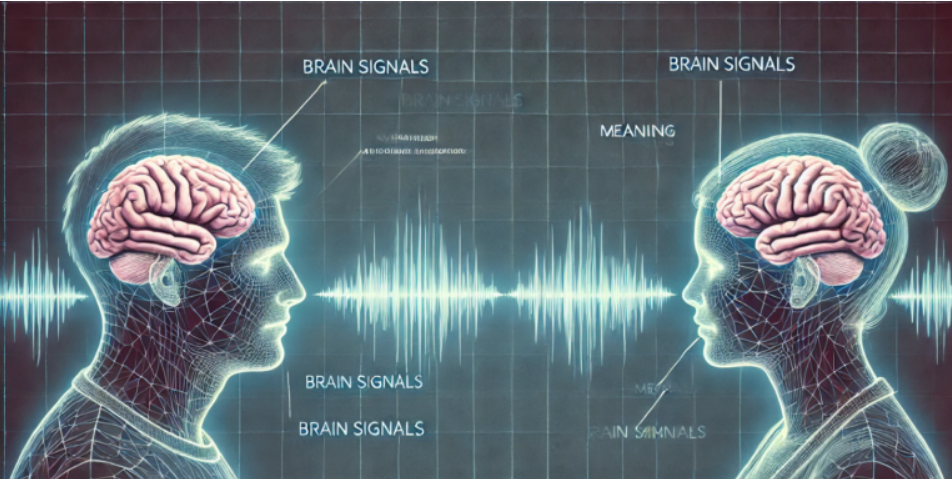
This study will utilize a range of advanced brain imaging techniques, such as electroencephalography (EEG), magnetoencephalography (MEG), or functional nearinfrared spectroscopy (fNIRS). If successfully developed, this will become the world's first system of its kind. B2BI is an emerging neural technology that mainly integrates two parts: one is the brain computer interface (BCI) part, which uses brain imaging technology to read brain activity; The second is the computer brain interface (CBI) part, which uses brain stimulation technology to send brain activity to another person's brain, allowing the second person's brain to directly process information without the need for text, sound, or gestures. B2BI technology typically involves the following steps: signal acquisition:
obtaining neural signals from the sender's brain. Signal processing: Analyze and decode the collected signals. Information transmission:
The processed information is transmitted to the receiver through a computer network. Neurostimulation: Using noninvasive methods such as transcranial magnetic stimulation to transmit information to the recipient's brain.
The significance of this research project may bring significant breakthroughs, such as helping doctors communicate with patients who cannot speak or move, assisting stroke patients in recovery, and even creating new ways for healthy populations to quickly share ideas. Since 2013, scientists have demonstrated the effectiveness of this method in both animals and humans, but it is still in the early stages of research and faces numerous technical and ethical challenges. For example, current methods rely on computers to "translate" brain signals rather than allowing the brain to communicate directly, as well as issues such as signal decoding accuracy, information transmission efficiency, privacy, and security.
The funding from NSF for this project demonstrates its determination to promote cuttingedge technological development and raises expectations for breakthroughs in future brain to brain communication technology\ |Reference content: NSF Award Search: Award # 2508624 - HCC: Small: Brain to Brain Interfacing Achieving Direct Bidirectional Noninvasive BraintoBrain Communication https://www.nsf.gov/awardsearch/showAward?AWD_ID=2508624
Article source: This article is from "Basic Research Observation" and is only used for academic information sharing. If there is any infringement, please contact the administrator to delete it. Original link: https://mp.weixin.qq.com/s/ia2yN1cQB5g6zqxXUUYXpg